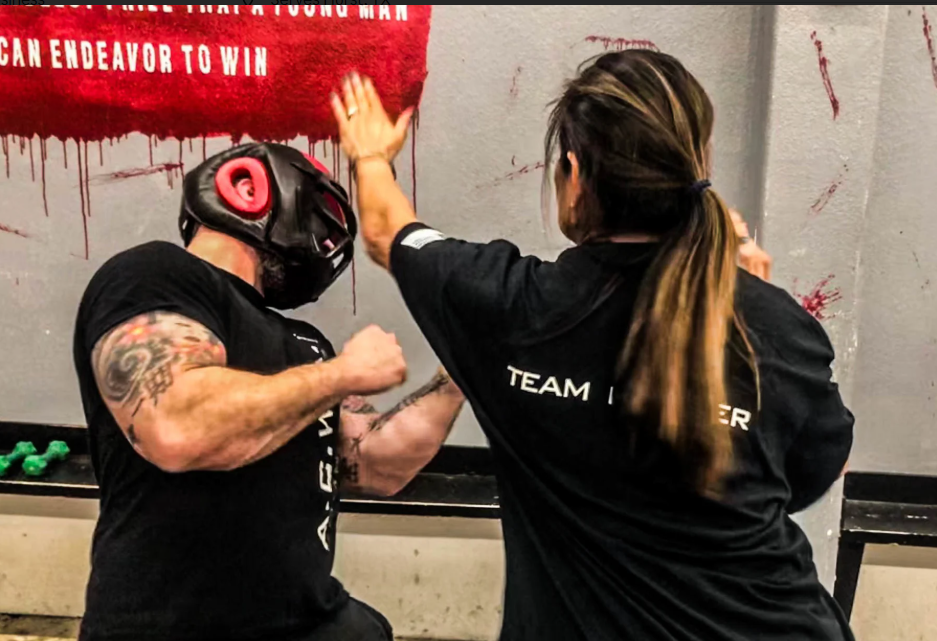
Excellent class today. We had some folks out, so it was damn near a private lesson. As a teacher, I actually find it more strenuous to teach a small class—but it’s really great to be able to slow down a little and fine-tune a student’s technique. I’ll never get tired of seeing someone struggle with something, then showing them a slightly different way of looking at it… and watching that “AHA!” moment hit. Suddenly, the method is theirs for life.
Today I showed a very small girl how to generate three times more power with her hammer fist using only a fraction of the effort she was originally putting in. Always fun.
Today we covered:
Ukemi Essentially, how to fall. For this quarter, we’re just learning to roll from a kneeling position. It’s a beginner drill, but no matter how advanced you are, it’s essential to drill fundamentals regularly. You’d be surprised what fresh insights you can gain from a “Green Level” drill even as a Black Belt.
Knee-to-Knee Transfer Nothing more than transitioning from a recovery position after a roll from a rear push. From a kneeling position, we can roll slightly to the right or left depending on which knee is down. If we want to change directions, we need to be able to switch knees (while protecting the head) and make sure our knees stay safe. Moving on concrete is very different from moving on a dojo mat! It’s a small skill, but it can make ground movement much more stealthy under pressure.
Movement as the First Defense There are essentially four components of defense. Movement is the first defense. Sometimes just moving is all it takes—but without movement, the other three fall apart. It’s important to drill this because it’s natural for people to freeze under stress. All the fancy technique in the world is worthless if your feet are frozen, no matter how strong you are.
Heart Rate in Combat We touched briefly on heart-rate ranges: normal resting (60–80 bpm) all the way up to the red zone/failure point (175+ bpm). The takeaway is that the average heart rate for optimal performance is roughly 145–155 bpm. However, if your cardio isn’t well conditioned, that optimal range is hard to sustain. Good news: just a little roadwork each week will get you where you need to be.
Why People Grab Any kind of grab is a setup for a second attack—either to hit you, slam you into something, throw you to the ground, hold you for someone else to hurt you, or drag you somewhere. Grabs aren’t really dangerous on their own, but they create an opportunity to shut down whatever is supposed to come next.
Defenses from Same-Side Grab You can really only be grabbed in three main ways:
- single hand on the same side
- cross-body grab (one or both hands)
- two hands (either same-side or cross-body)
Today we worked on same-side grab. We drilled two methods while integrating all the concepts mentioned above:
- Destroying the tricep with the elbow
- (If the opponent counters the initial defense) Counter the bent-arm control with a face push
As for the actual movements—you have to come to class to learn them! 😄 If you’d like to visit, get in touch for a free class and see what Ronin Self Defense Academy here in Prosper, Texas, is all about.
I hope to meet you at the next class!